Every dog owner has been there. You walk through the door after a brutal day at work, and your pup immediately drops their toy, walks over, and rests their chin on your knee. Or perhaps you grab their leash, and they explode into a flurry of spins and joyful barks.
For decades, science was cautious about using words like “joy” or “grief” to describe animals. Traditional behaviourism suggested that dogs were simply reacting to cues to get rewards. But as pet parents, we knew better.
Thanks to the groundbreaking work of neuroscientist Jaak Panksepp, science has finally caught up to what dog owners have always known: dogs experience deep, distinct emotional lives. Panksepp pioneered a field called ++affective neuroscience++, proving that all mammals share core emotional systems built directly into their brains.
Understanding these systems doesn’t just make you a better-informed owner—it fundamentally changes how you train, comfort, and live with your dog.
(Before you continue see if you can guess the 7 emotion systems – write them down!)
The “Big Seven” Emotional Systems
Panksepp identified seven primary emotional systems located in the ancient, subcortical regions of the mammalian brain. Dogs have the exact same neurological plumbing for these feelings as we do. Here is how Panksepp’s science plays out right in your living room:
| Panksepp’s System | What It Looks Like in Your Dog | Why It Matters to You |
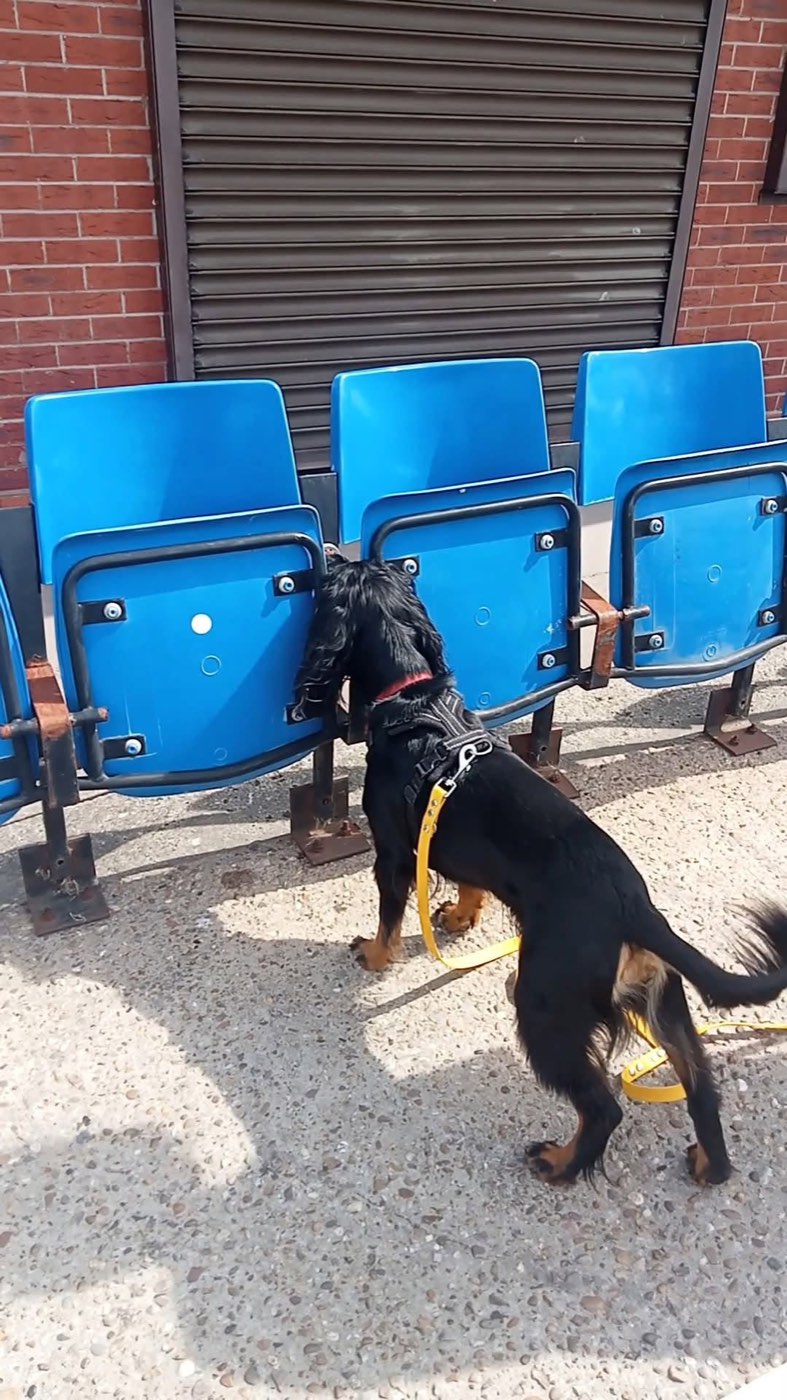
| SEEKING | Sniffing every blade of grass, tracking a scent, exploring a new trail. | This is your dog’s default setting. Scent-work and puzzles satisfy this drive, making them naturally tired and content. |
| PLAY | The classic play-bow, standard “zoomies”, and wrestling with dog buddies. | Social play releases hitches of dopamine and is vital for their social development and joy. |
| CARE | Nuzzling you when you cry, grooming, and maternal bonding. | This system drives the profound emotional connection and unconditional love between you and your dog. |
| FEAR | Tucking the tail, shaking during fireworks, or freezing in place. | Fear is a survival mechanism. A fearful dog cannot simply “snap out of it”; they need safety and redirection. |
| LUST | Hormonal reproductive drives. | Largely managed in pet dogs through spaying and neutering. |
| RAGE/FRUSTRATION | Barking on a tight leash when they can’t reach a friend, or resource guarding. | Rage is often triggered by restricted freedom. Frustration happens when a dog is blocked from a goal. |
| PANIC/GRIEF | Whining, howling, and destroying door frames when left alone. | This is the root of separation anxiety. It isn’t spite; it is genuine neurological distress from being isolated from the pack. |
(Still got your piece of paper? No put a tick by the emotions you think your dogs would actively want to experience and a cross by those they would try to avoid).
Key Takeaways for Pet Owners
1. Ditch the Idea of “Spite”
When your dog chews up your favourite shoe while you’re out, it’s easy to think, “They did that because they’re mad at me.” Panksepp’s work proves that dogs lack the complex, secondary cognitive architecture for spite, pride, or calculated guilt.
Instead, a destructive dog is usually operating under the PANIC/GRIEF system. Chewing releases calming endorphins to cope with intense isolation distress. Shifting your mindset from “my dog is being bad” to “my dog is in distress” changes how you address separation anxiety.
2. Lean Into “Seeking” to Cure Boredom
Many owners think physical exercise is the only way to tire out a dog. But activating the SEEKING system is a shortcut to a calm pet. Letting your dog sniff extensively on walks, scattering their kibble in the grass, or using snuffle mats taps into their natural urge to explore. Mental enrichment through sniffing can tire a high-energy dog out faster than a three-mile run.
3. Lead With Rewards, Not Fear
Because we know dogs have a fully functioning FEAR and RAGE network, our approach to training matters immensely. Using rewards activates the SEEKING and PLAY systems, making learning a joyful experience. Conversely, aversive methods rely on triggering the FEAR and PAIN systems. While it might stop a behaviour in the short term, it damages the underlying trust and creates chronic anxiety.
4. They Really Do Absorb Your Stress
Because dogs are deeply social pack animals, their CARE and emotional systems are highly attuned to ours. Studies have shown that dogs synchronize their long-term stress hormones (cortisol) with their owners. If you are chronically stressed, anxious, or angry, your dog will often mirror that emotional contagion. Taking care of your own mental well-being is quite literally an act of care for your dog.
The Bottom Line
Jaak Panksepp gave pet owners the scientific permission to treat dogs as the emotionally complex beings we always knew they were. By recognizing whether your dog is operating out of SEEKING, FEAR, or PANIC, you can stop reacting to their surface behaviours and start addressing their true emotional needs.
Next time your dog looks at you with those deep, soulful eyes, don’t doubt it: science confirms the love is entirely real.